Category Archives: Uncategorized

Public health emergencies and school attendance: What the Ebola crisis can teach us about the coming post-COVID education landscape

Published in International Journal of Education Development in 2021.

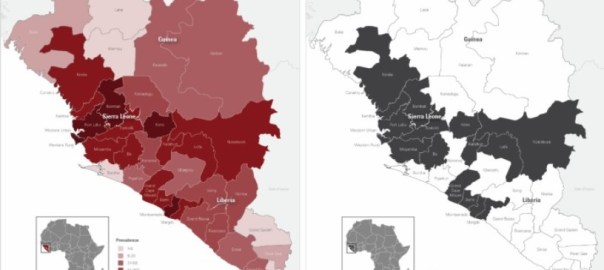
Using nine Demographic and Health Surveys for the three West African countries affected by the 2013−16 Ebola epidemic, this study applies a district-level interrupted time series (ITS) design to explore the longer-term impacts of the epidemic on school attendance. It shows that, about three to four years after the crisis, attendance has returned to the long-term trend regardless of the difference in Ebola virus disease prevalence among districts. The study also shows no discernable effect on the attendance trends for children from vulnerable backgrounds. However, it suggests further areas for examination and study. This includes migration patterns, the investment of emergency relief and overseas development aid between regions, the possible role of orphan status and early marriage (for girls) as vectors for the effect of the EVD crisis on educational outcomes and learnings losses for children who were out of school for up to an entire school year.

Research: In-person schooling and COVID-19 transmission: A review of the evidence

I worked on this review of the early evidence with my UNICEF colleague, Oscar Onam.

The brief is based on a review of twenty-six publications: reviews of literature, national surveillance studies of re-opened schools, ecological studies, transmission modelling simulation studies and case tracing studies. The authors include government agencies, academic researchers and independent research organizations. Most sources are focused on high-income countries. The preliminary findings thus far suggest that in-person schooling – especially when coupled with preventive and control measures – had lower secondary COVID-19 transmission rates compared to other settings and do not seem to have significantly contributed to the overall community transmission risks.

We had published an earlier version of this review in 2020.

Research: COVID-19: How prepared are global education systems for future crises?

KEY FINDINGS
This research brief is one of a series exploring the effects of COVID-19 on education. It focuses on how school closures affect children and the resiliency of education systems to respond to such disruptions and mitigate their effects.

  1. Unexpected school closures are shown to negatively influence children’s learning outcomes. Whether and to what extent students may make up the learning losses varies over time. Some factors may include closure duration, quality of education before and after closure, proximity of the closure to a child’s schooling transition, and whether the child experienced a traumatic event.
  2. Beyond the negative consequences on learning, school closures expose students to additional risks. Hundreds of millions of children rely on schools for free or low-price meals throughout the year. At the same time, school closures can expose children to violence (including sexual violence and forced marriage) at home and in their communities. Children’s need for psychosocial support also increases.
  3. As it is likely the world will face more crises forcing schools to close, strengthening the resilience of education systems is a priority to mitigate the damage school closures have on children’s learning and well-being. Countries must build capacity to deliver quality education remotely, using a blended approach (with increased capacity of teachers) and targeting vulnerable and marginalized children who are often forgotten.

Read more of the brief here.

Research: Alif Ailaan District Education Rankings 2015

May 7, 2015: The SDPI and Alif Ailaan teams launched the 3rd Alif Ailaan District Education Rankings for Pakistan in Islamabad. This was the third consecutive year of the publication of the rankings. A brief abstract is below.

The rankings attempt to assess both educational outcomes and school infrastructure by comparing the relative performance of different regions.  The rankings provides a comprehensive measure of education standards in Pakistan, covering important policy areas such as access, quality, gender parity and infrastructure.

Continue reading Research: Alif Ailaan District Education Rankings 2015

Research: Organizational capacity building in Southern think tanks

Feb, 2015: As part of its participation in IDRC’s Think Tank Initiative SDPI was part of a group of five Southern think tanks, that prepared self-reported case studies on using an action research approach to identify how the organizations had changed their own capacity over the previous 5-6 years.

Continue reading Research: Organizational capacity building in Southern think tanks

Research: School facilities and educational outcomes

UNDP-DevAdvo-Graph

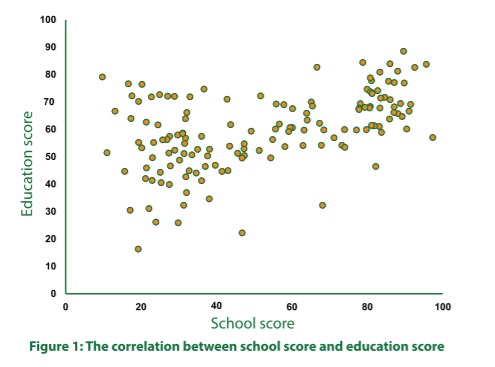
May 2014: As a follow up to the launch of the 2nd Alif Ailaan Pakistan district education rankings, Saman Naz (a colleague from Alif Ailaan) and I went back to the rankings data and tested the hypothesis that improved school infrastructure (based on the infrastructure score from the rankings) could be associated with improved educational outcomes (based on the education score).

Continue reading Research: School facilities and educational outcomes